


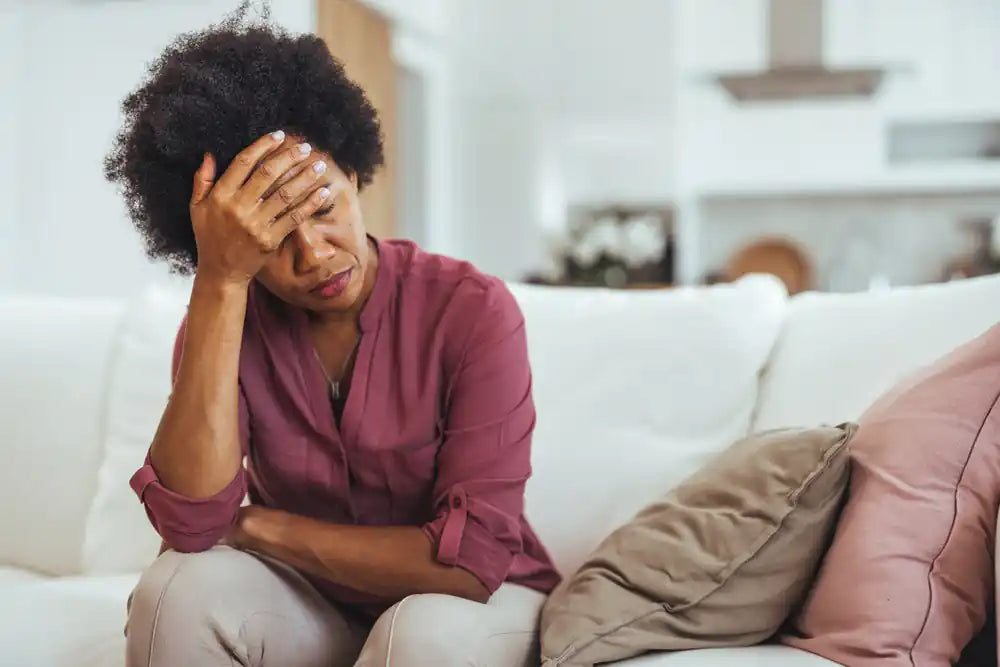
It is a fact that simply being a middle-aged woman means you are more likely to be dealing with higher levels of stress and fatigue than younger women or men in general. Here we look at some of the reasons why and which supplements can help you manage these symptoms.
Workplace stress

The stress and fatigue experienced by women has been much studied with respect to the workplace. A US study found that of all workers suffering with fatigue, they were much more likely to be 40 years and older, and twice as likely to be female. A separate study found that a range of work-related stressors were associated with fatigue and ‘being female’ was one of the key influencers.
Caring and the sandwich generation
For many women, midlife is characterised by simultaneously providing care or support to children along with caring for older parents or relatives. This is often referred to as the ‘sandwich generation’, as these women are ‘sandwiched’ between the needs of their children and those of older relatives, often in addition to the demands of employment. In balancing these many competing demands, women experience higher levels of stress which can adversely impact on individual well-being.

The relationship between perceived stress and subjective wellbeing (SWB) in ‘the sandwich generation’ was evaluated in a study consisting of middle-aged females. They measured perceived levels of stress, coping strategies, life satisfaction and positive and negative moods. Results showed that stress unsurprisingly has negative effects on feelings of wellbeing, emotional response and problem-focused coping strategies. This shows that it is not just a woman’s workplace situation, but also the middle-aged stage of life that has an additional impact on stress and fatigue.
The menopause
Whether you are in the peri-menopause, menopause or post menopause stage of life, this transitional period results in huge changes within your body. Of all the symptoms experienced by women over the course of the menopausal transition (MT), fatigue is clinically significant and can be one of the most common and distressing symptoms associated with menopause. In a cross-sectional study of 300 women, 85.3% of post-menopausal women and 46.5% of peri-menopausal women reported symptoms of physical and mental exhaustion compared to just 19.7% of the pre-menopausal women.

Levels of fatigue associated with the menopause can also have financial consequences: a small qualitative study found that female teachers were more likely to retire early due to fatigue as they aged, thus having fiscal consequences for their retirement and for schools losing experienced teachers.
During the menopause there is also a clear relationship between fatigue and stress. Feelings of stress can make you feel tired and being fatigued can cause feelings of stress as you aren’t able to perform at your best.
Stress and fatigue can affect women differently dependent upon their life stage, and the menopause has a lot to answer for in this respect. But there are some natural remedies and particular vitamins that can help.
The adaptogen Rhodiola
Rhodiola rosea is one of the most popular adaptogens. Studies show that long term use of Rhodiola rosea extract can help to reduce feelings of stress by enabling the body to adapt better to the physiological changes that stress brings. It has been shown that women are more susceptible than men to stress-related mental health issues and there is an extensive overlap of such disorders with menstrual-related phenomena in women (e.g. premenstrual tension, postpartum, perimenopausal and postmenopausal syndromes). Rhodiola rosea might prove to be effective for the reduction of stress associated with these hormone-related disorders.
The benefits of B Vitamins

The full B-vitamin complex consists of eight B-vitamins and they all help support normal energy levels with some contributing to the reduction of tiredness and fatigue. B-vitamins have also been demonstrated to be beneficial in reducing workplace stress: in one study, vitamin B complex treatment groups reported significantly lower personal strain and a reduction in confusion and low mood after 12 weeks compared with those who did not take the vitamin-B complex.
In the immortal words of Patsy Cline: “Sometimes it’s hard to be a woman”. But it is good to know that there are some natural ways to support your wellbeing during the mid-life stage and that you’re not on your own.
For more top tips visit the Menopause Health Support page.
Discover Women's Balance - a unique blend of vitamins, minerals and botanicals designed to support you through this stage of life.



Share: