



When it comes to living an active and comfortable life, having healthy joints that work well and support our bodies is often at the top of the list. Whether we enjoy walking, running, cycling, or dancing, or just want to be able to move with ease, our joint health can have a big impact on our overall wellbeing, lifestyle, and happiness. Joint health supplements can offer additional support and help contribute to our levels of flexibility and mobility.
Our Joint Health Products
Explore Our Range Of Joint Pain Supplements
Frequently Asked Questions About Joint Health
Why is mobility so important?
Healthy joints and good mobility allow us to move easily with reduced pain and discomfort and improve our ability to function day to day.
Having a good level of mobility plays a role in:
- Preventing injuries.
- Maintaining good posture.
- Supporting a full and pain-free range of motion, which enhances our ability to bend and stretch.
- Promoting a greater ease of movement which leads to improved balance and coordination, helping to reduce the risk of falls.
- Engaging in daily activities and hobbies with greater ease and comfort, contributing to a higher quality of life.
What can impact on joint mobility?
There are many factors in the body, alongside behavioural influencers, which can impact joint health :
Cartilage health and maintenance
Cartilage doesn’t have its own blood supply; its nutrition comes from synovial fluid (the natural lubricant in joints). Wear and tear, low levels of loading of a joint, or excessive loading of a joint can damage it. Exercise helps to maintain cartilage integrity and stimulate production of lubricin (a compound involved in joint lubrication) and other essential molecules.
Muscle strength & mass
Muscles around our joints help to stabilise them, absorb shock, maintain alignment, and help reduce undue stress on ligaments, cartilage, and joint surfaces. Loss of muscle strength (especially lower limb muscles in knee and hip joints) increases the risk of osteoarthritis and can lead to a decline in mobility.
Biomechanical loading
Appropriate loading (through weight bearing and movement) is necessary for the maintenance of joint tissues and therefore joint health. Both under‐loading (through inactivity) and overloading (through overactivity or pressure on joints with weak supportive tissues) can cause issues.
Inflammation
Ongoing inflammation contributes to cartilage breakdown, pain, and stiffness (e.g. as seen in osteoarthritis, or rheumatoid arthritis). Lifestyle and diet can also play a part in this inflammatory process.
Body weight
Excess body weight increases mechanical load on weight‐bearing joints (especially knees, hips, and ankles), exacerbates inflammation, and contributes to mobility loss.
Sleep and stress
Poor-quality sleep increases sensitivity to pain, increases inflammation, and adversely affects recovery and perception of stiffness. Similarly, stress can heighten inflammation and worsen pain and joint complaints.
Ageing & hormonal changes
With increasing age, there is loss of muscle mass, reduced quality of cartilage repair, changes in synovial fluid viscosity, and hormonal shifts (e.g. menopause) that can affect bone density and collagen integrity.
Joint injury, overuse, or prior damage
Previous injuries, joint misalignment, and/or repetitive strains are precursors for a risk of reduced mobility in the long term.
How can nutrition help support joint mobility?
There are several dietary factors which can help maintain or improve joint mobility (or slow its deterioration):
Omega-3 fatty acids
Omega-3s have an anti-inflammatory action and may reduce joint pain and stiffness. They can also help preserve cartilage in people who engage in regular moderate exercise.
Adequate protein
Protein is needed for repair of muscles, tendons, and cartilage. It supports maintenance of lean mass, especially in older adults: a lack of protein can have a negative impact on joint support.
Antioxidant vitamins & phytochemicals
These help limit oxidative damage to collagen and cartilage. Vitamin C is essential in collagen synthesis; phytochemicals may inhibit cartilage degradation.
Vitamin D and calcium-rich foods
Vitamin D and calcium are essential for bone health. Including fatty fish, fortified foods, dairy, plant milks, leafy greens, and nuts will help increase your intake.
Hydration
Drinking enough water and eating hydrating foods (such as fruit and vegetables) are important for joint lubrication.
Who may benefit from joint health supplements?
Older adults
As we age, the levels of collagen naturally start to decline in the body. There is also a decrease in muscle mass. Joint supplements provide essential nutrients which can help contribute to collagen formation, muscle functioning, and joint comfort.
Women going through the menopause
The hormonal changes associated with the menopause result in a loss of bone density and declining collagen levels. Joint health supplements can contribute to bone health and support collagen synthesis.
Athletes and physically active people
Being highly active puts more strain on joints and muscles, which can result in higher levels of wear and tear. Joint supplements can help contribute to cartilage formation which will support the body with repair.
Which nutrients support normal joint and bone health?
Turmeric and Boswellia
Boswellia helps support joint flexibility and keeps joints feeling cool and comfortable.
Turmeric has active constituents called ‘curcuminoids’ which can help to support mobility.
Vitamins and minerals
There are a number of essential nutrients that play an important role when it comes to our joint health. Making sure we avoid micronutrient deficiencies is another way to help support our mobility and keep us moving.
Vitamins D3 and K plus manganese contribute to normal bone health
Vitamin C helps support normal collagen formation which in turn supports the normal functioning of cartilage.
Vitamin D3 contributes to normal muscle functioning.
Other botanicals
PEA and ASUs have been the subject of numerous research studies investigating their role in mobility.
Palmitoylethanolamide (PEA) is a naturally occurring fatty acid involved in cellular activity.
Avocado & Soy Unsaponfiables (ASUs) are a mixture of natural compounds derived from avocado and soybean oils.
Can joint supplements be taken daily?
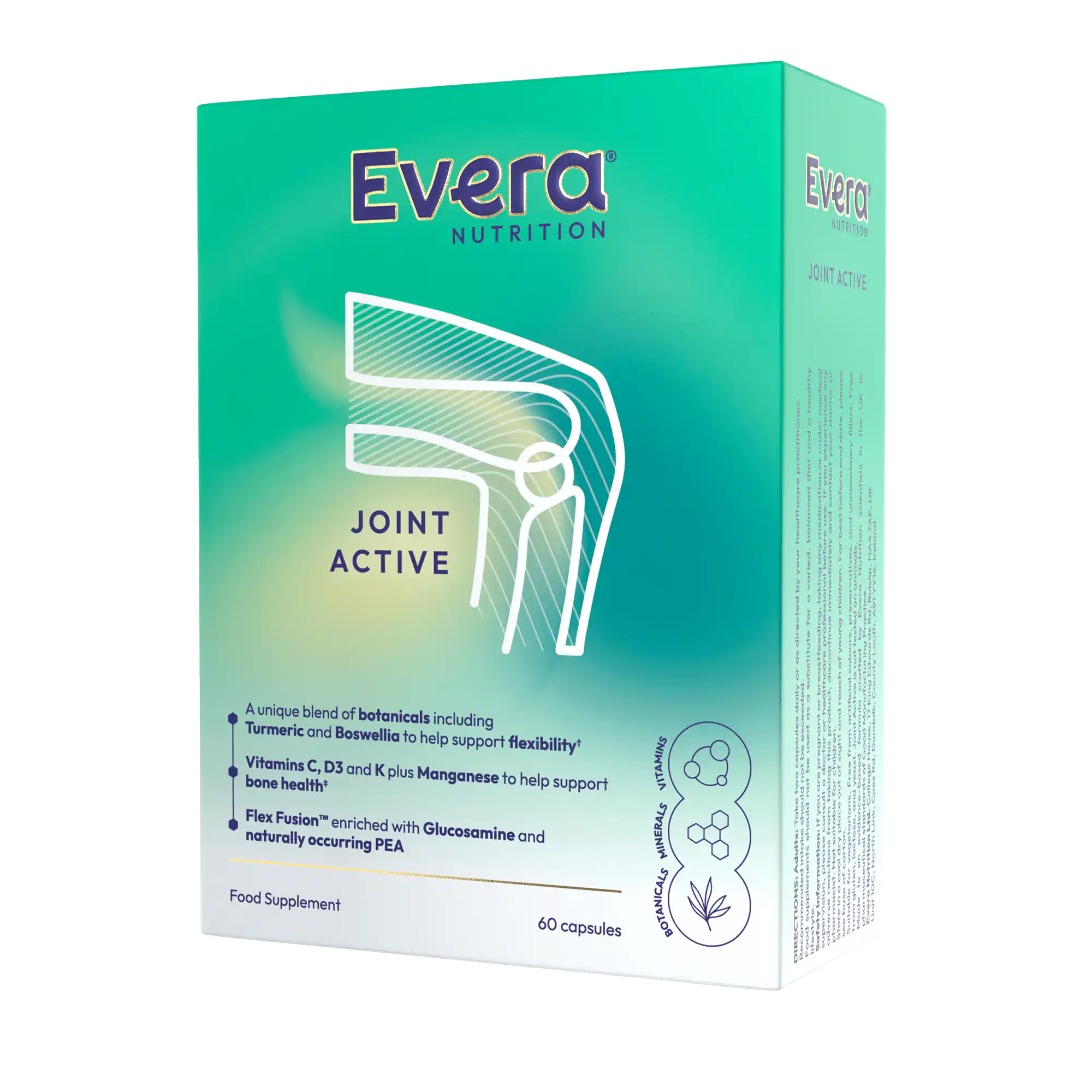
Yes – Joint Active can be taken daily.
Discover Joint Active