


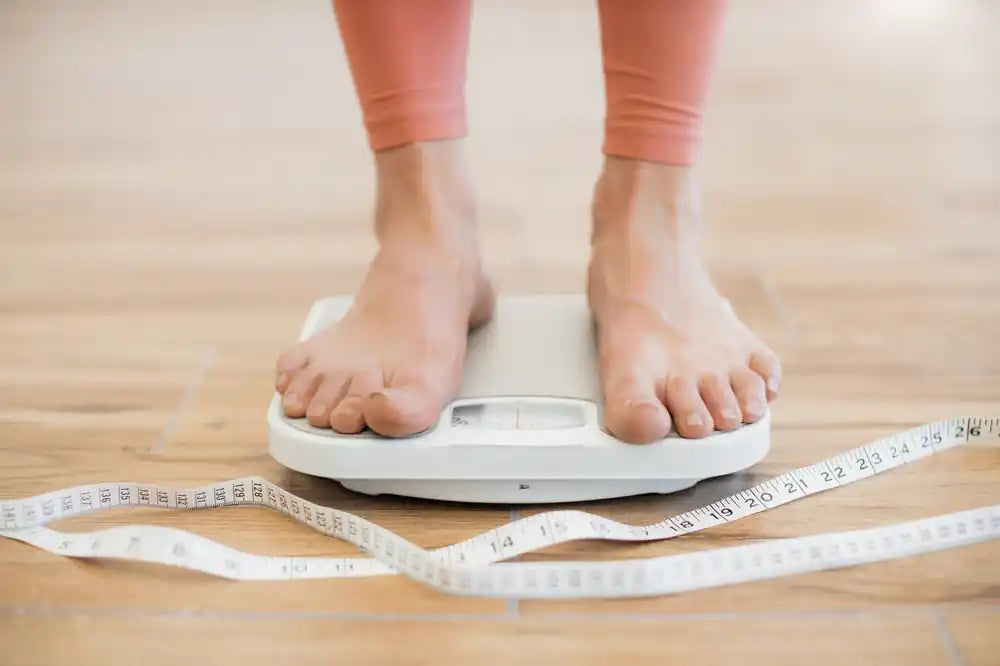
Weight gain doesn't just affect your appearance and how you may feel about yourself. It's a potential health risk, because it's associated with an increased risk of cardiovascular problems, such as heart attack, stroke, or high blood pressure. Maintaining a healthy weight is one of the most important things you can do to support our overall wellbeing.
So, what positive steps can you take to help manage your weight now and into the future?
Plan for the long term

To successfully manage your weight, you need to make lifestyle changes that you can stick with indefinitely. It is important to find longer-term solutions to stop the cycle of weight gain and loss, since losing and regaining weight can actually make it more difficult to keep weight off over the long term.
Whatever strategy works for you it needs to be one that can be committed to long term. So be honest with yourself and take small steps before any giant leaps. Remember to recognise all your improvements in wellbeing from sleep quality to exercise stamina, not just how many pounds you have dropped.
Eat less and move more

It may sound simple but being extra diligent about following a healthy diet and increasing your physical activity are two things that you have control over. Whenever possible, it’s important to avoid fad diets, as very often these programs work in the short term but aren't sustainable for most people over time.
As for physical activity, any movement is better than none, but more vigorous workouts can help with weight control. Aim for exercise that make you break a sweat and gets you a bit out of breath. Build up to a target of 150 minutes of aerobic exercise a week – or 30 minutes 5 days a week.
Add strength to your workouts

An important and often overlooked component of an effective exercise program is strength training. Women in particular start to lose muscle mass after menopause due to the associated hormonal changes, unless they take steps to reverse it.
Building muscle can increase what's known as your basal metabolic rate - the amount of energy your body needs to keep working when you're not moving. This energy is used for things like maintaining your body temperature, keeping your heart beating, and breathing.
So, building muscle can help you burn more calories, which can help with weight control.
An easy way to incorporate both strength-building exercises and cardiovascular exercises is to perform a circuit-style workout that includes both. It’s recommended that strength-building exercises are included in your fitness plan at least twice a week.
Address sleep problems

Poor sleep quality can compound problems with weight gain. A lack of sleep affects your weight in much the same way as hormonal shifts, making you want to eat more and causing your body to collect fat around your middle.
If you are experiencing disturbed sleep, practice good sleep habits: remove all electronic screens from the bedroom for at least an hour before bedtime. Go to bed and get up at the same time each day. Ensure your bedroom is a restful sleep environment – cool, quiet and calm. If sleep quality doesn't improve, always ask for advice from your healthcare professional.
Check your medications
Find out if there is a connection between any medication you may be taking and weight gain. If you are taking new medication and have noticed weight gain, it may be worth a conversation with your doctor.
Reduce your stress levels

Stress, like poor sleep, can lead to weight gain. Find strategies to manage stress that work for you, such as meditation, breathing exercises, mindfulness or yoga.
Make some ‘me time’ every day to destress and relax; book time out in your diary so that you stick to it. Over time this will become a regular habit and an important part of your wellness strategy overall not just your weight management strategy.
Seek help from a weight-loss expert

If you've maximised your diet and physical activity, reduced stress, and improved sleep quality and duration as much as you can, and you're still not able to control your weight, it may be time to seek out the help of a weight-loss professional or your doctor. A trained healthcare professional can provide additional options such as medication to help with weight loss.
For natural supplementation support discover Go Lean Plus – a unique combination of vitamins, minerals and botanicals designed to support your weight management journey helping you feel confident, in control, and supported at every stage.



Share: