



Maintaining a positive mindset and reducing the impact of stress and anxiety can have a big impact on both our mental and physical wellbeing. How happy and relaxed we feel effects all aspects of our lives, from our job performance and personal relationships to our own levels of self-confidence and motivation. To bring a sense of calm to your day, anxiety supplements or stress and mood supplements can help support your emotional wellbeing and feelings of relaxation.
Our Stress Relief Products
Explore Our Range Of Stress, Mood & Anxiety Supplements
FrequentlyAsked Questions About Stress, Mood and Anxiety
Why is managing stress important for overall wellbeing?
Managing stress is crucial for our physical and mental health. Emotional balance and mental resilience mean we are better able to cope with whatever the day has in store. A relaxed state of mind also benefits us physically, by improving our immune response and lowering our heart rate.
There are many lifestyle factors which can impact on our feelings of stress and mood :
Sleep
· Poor sleep (both quantity & quality) increases risk of low mood, worsens anxiety and reduces our ability to handle stress. Sleep disruption also affects our appetite and food choices (for example, we may have more cravings for high sugar or high fat).
Physical Activity / Exercise
· Exercise increases endorphins (compounds produced in the brain that block the perception of pain and increase feelings of wellbeing). Being active also supports connections between cells in the brain, reduces inflammation, improves sleep, and helps regulate our stress response.
Stress Management
· Mindfulness, meditation, yoga, and relaxation techniques (such as deep breathing, or progressive muscle relaxation) can help to manage feelings of stress or anxiety.
Social Connection & Environment
· Isolation and loneliness are risk factors for low mood and anxiety. Aim to keep up to date with friends and family though regular face to face catchups in person and/or on-line. Try to spend some time outdoors in natural light every day.
Substances / Stimulants
· Alcohol, caffeine, and nicotine can all disturb sleep, and impact negatively on anxiety and mood.
Can stress and mood affect our physical health?
Stress can manifest itself in many ways resulting in changes to our physical wellbeing:
Fight-or-Flight Response
When we feel fear, anger, or anxiety, all of which affect our mood and feelings of stress, the autonomic nervous system is activated, initiating our ‘fight or flight’ response. This response releases adrenaline, which results in an increased heart rate, increased blood pressure, and tightening of our muscles so we are ready to face the threat or run away.
The Stress response
When we are under constant stress the body releases cortisol. This hormone increases our blood glucose levels for extra energy, sharpens focus and reduces ‘non-essential’ body functions. These are essential survival responses but day to day, we do not need to be in ‘survival’ mode.
Both the fight-or-flight response and the stress response can have a knock-on effect on our physical health including:
· Digestive problems such as upset stomach, slow digestion, and slower metabolism.
· Lower immunity, meaning we are more susceptible to colds and flu, and are slower to heal.
· Pain including headaches and muscular tension.
· Sleep issues such as insomnia or general restlessness.
· Mental effects including difficulty focusing and poorer memory and recall.
· Tiredness and fatigue.
How does diet affect our mood and feelings of stress?
Nutrition and the micronutrients we eat every day play an essential role in how our bodies deal with stress and mood.
Neurotransmitter synthesis
· Nutrients including amino acids, B vitamins, magnesium, and zinc are required for the production of neurotransmitters such as serotonin, dopamine, and GABA. These neurotransmitters allow nerve cells to communicate with each other and help to regulate mood.
Inflammation and immunity
· A diet which is high in sugar, saturated fats, and ultra‐processed foods can lead to inflammation throughout the body. Inflammation is associated with low mood and anxiety, possibly due to its effects on brain structure and function.
Glycaemic control and blood sugar levels
· Diets which are high in refined carbohydrates and sugars can lead to fluctuations in blood glucose (known as our glycaemic response.) These peaks and troughs can lead to irritability, anxiety, and fatigue. Maintaining stable blood sugar levels via a well-balanced diet can help.
Gut‐brain axis & microbiome
· The balance of friendly bacteria in the gut (known as the microbiome) influences our brain function. A diverse, healthy microbiome is associated with lower anxiety symptoms and better mood.
How does nutrition support emotional balance?
· Eating a diet which is high in refined sugars, highly processed foods, and saturated & trans fats may be associated with inflammation and blood glucose peaks and troughs. This can exacerbate oxidative stress and contribute to our feelings of stress or low mood.
· Instead, adopt a whole‐food, minimally processed diet (e.g. Mediterranean style diet). This will increase your intake of anti‐inflammatory nutrients and help reduce oxidative stress. Include omega‐3 fatty acids: these help manage inflammation throughout the body and support brain health.
· Eat well-balanced meals and ensure you are getting all the essential micronutrients you need. B vitamins, (including folate, and B12), magnesium, zinc, vitamin D, and antioxidants are needed for neurotransmitter production, which help support our stress response and offer neuroprotection. Conversely, deficiencies may be linked with low mood and anxiety.
How can supplements help reduce feelings of stress?
Whatever may be affecting your mood and feelings of stress, there are vitamins, minerals, and botanicals which can help to support your mental wellbeing.
Which nutrients help support a positive mood and reduce stress?
· Ashwagandha is an adaptogen which helps the body to manage stress.
· Bacopa Monnieri is another adaptogen which also helps support concentration, memory, and cognitive performance.
· Other adaptogens include Rhodiola Rosea, Siberian Ginseng, Korean Ginseng, and Green Tea.
· There are a wide range of ayurvedic botanicals which can help support our mood including Saffron which contributes to emotional balance, helps to maintain a positive mood, and supports relaxation.
· Other ayurvedic botanicals include Mulberry, Tulsi, Deglycyrrhized Liquorice, and Schizandra.
Anxiety supplements and stress and mood supplements may contain some of these botanicals.
What role do vitamins and minerals play in reducing stress and supporting mental wellbeing?
Deficiencies in essential vitamins and minerals can affect cognitive and psychological function as well as energy levels. These deficits can also affect the functioning of the nervous and hormonal systems which can impact upon our ability to deal with stress and emotional issues.
· Vitamins B1, B6, B12, and C, biotin and folic acid contribute to normal psychological function.
· Iron, iodine and zinc contribute to normal cognitive function.
· Vitamins B1, B2, B6, B12, and C, copper and magnesium contribute to normal functioning of the nervous system.
· Vitamin B5 contributes to normal synthesis and metabolism of steroid hormones, vitamin D, and some neurotransmitters.
· Vitamin B6 contributes to the regulation of hormonal activity.
· Vitamins B2, B6, B12, and C, folic acid, iron and magnesium contribute to the reduction of tiredness and fatigue.
Vitamins B2, C and E, plus zinc and copper also contribute to the protection of cells from something called ‘oxidative stress’. These nutrients can help to combat free radicals – molecules that can cause damage in our bodies.
Making sure to eat a healthy, balanced diet full of colourful fruits and vegetables will increase your intake of these important antioxidants, vitamins, and minerals.
Anxiety supplements and stress and mood supplements may also contain a range of these essential vitamins and minerals.
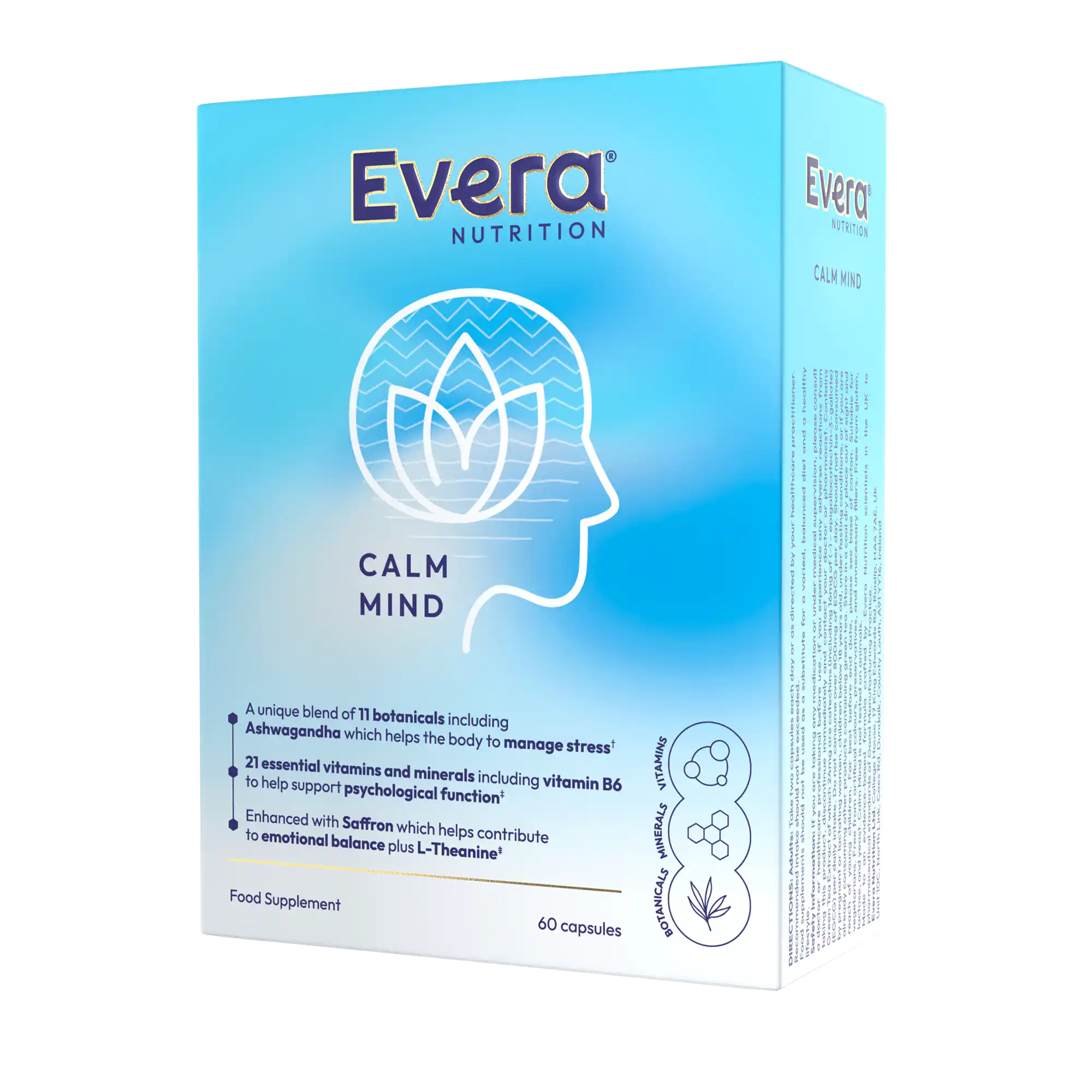
Are Calm Mind supplements suitable for daily use?
Yes – Calm Mind is suitable for daily use.